Saturday, June 27, 2015

The Church Will Not Change the World Unless...

Last Thursday, I had a powerful, genuine, moving spiritual experience, something I haven’t had for a long time.  A small group of passionate people gathered together and sang and spoke over the injustices happening around us, and we mourned and raged at the lack of real, compassionate response.  We celebrated a safe space for people of all ethnicities, political beliefs, genders, and sexual-orientations.  Hope was offered that the tragedies of this life don’t have to continue.  We mourned that Freddie Gray would’ve turned 13 that day had he not been killed.  We talked about mental health issues and celebrated that people can find hope outside of their depression or bi-polar or schizophrenia.  And at the end of the night, I and others like me left feeling like we could change the world.  I felt on fire!

Do you know what is sad though?  This experience didn’t happen at a church.  This wasn’t a Christian event.  In fact, a good majority of the people present were probably atheist. It was a punk rock show.  And I left feeling like maybe punk rock could change the world because it was willing to stand up for something real, for something right and to call its congregation to action; for some reason it embodied Jesus’ ethics without even believing in Jesus.

The problem is, I’m not so sure that the church in America is going to change the world because it does not have the courage to live like Christ over and against the way that popular Christianity is choosing to live.

In Matthew chapter 7, Jesus tells a parable of two builders, one who wisely chooses to build his house on a foundation that can withstand a strong storm, and the other who chooses to build his house on a weak foundation which will be destroyed by the wind and waves.
He uses this parable as the capstone of the entire Sermon on the Mount to say that it is the wise person who hears these words and founds his or her life on them by following them.  Anything else will lead to destruction. 

The question we are left with is, do we follow or not?  It’s really a simple question, but our response carries immense repercussions. 

Wednesday, June 24, 2015

Jesus Does NOT Care About Your So-Called Gun Rights

On June 17th, our nation bore witness to another mass murder at the hands of a person who should not have had access to a weapon.  Predictably, the internet is also bearing witness to another flood of gun-supporters advocating that it’s not really about guns and that stricter laws won’t do anything useful aside from turn our nation into some authoritarian Marxist paradise led by Herr Obama (see crazy fantasies of a dystopian future).  At this point, I cannot imagine what it would take for gun-advocates to concede, even a little, that America has a gun-problem.  Yes, these shooting deaths are is related to mental health, no, they weren’t using automatic weapons, yes, people will access guns illegally if they want to, and no, a total crackdown wouldn’t solve all of the problems.  But for crying out loud, waving our 2nd amendment flag surely isn’t changing anything!  You do know what the definition of insanity is right?  Doing the same thing over and over again and expecting different results.    

But this post isn’t simply about gun-control and gun-violence.  This is directed at CHRISTIANS who believe that it is their God-given right and duty to bear arms, and that nobody, especially the government, can take those rights  away.

I want to let you in on a little secret…are you ready?

…Jesus doesn’t care about your gun rights!
 In fact, Jesus doesn’t care about guns at all, except that they are an expedient method of violence and death which serve as tools of the enemy to bring about division, destruction and tragedy.  Although I would imagine that he is extremely disappointed that for a large percentage of Christians, guns and the kingdom of this world is trumping peace and the Kingdom of God.  Nowhere in the Bible does it suggest that a person has the right to take up arms against their fellow person, or to own weapons to protect the lives of themselves or others.  Not one single time does Jesus command us to encourage a culture of violence so that we can own the freedoms of “Life, Liberty, and the Pursuit of Happiness” (where is this found in Scripture again?)  And Jesus certainly never asks us to tout what we believe to be personal freedoms as Americans and Westerners at the clear expense of the lives of others, especially the innocent (i.e. children).  (By the way, I find it fascinating that those who are the most vehement supporters of the right to bear arms, which has indirectly caused the massacres at Sandy Hook and Columbine as well as all of the accidental shooting deaths of children across America, are also rabid pro-life missionaries, whose stance is that all children have the right to live, except if that interferes with the right to bear arms.)

Friday, June 5, 2015

What I'm doing with My Summer Vacation.

So, less than a month ago, I graduated from Ashland Theological Seminary with my Master's of Divinity.  This degree was ultimately a six year journey through various levels of heaven and hell through which I believe I have become a richer (spiritually speaking, not fiscally obvs) person.  Since then, several people have asked, "What are you going to do now?"  I find this question to be funny; it makes sense to ask a high school graduate what they might do, or even someone graduating college.  I on the other hand, am married and 5 years into my career at Oak Grove.  So what I am going "to do" is continue on this path. (When I'm asked this question, I can't help but feel liking I'm being asked the recurring, cyclical question and answer from "Pinky and the Brain")


On the other hand, I haven't not been a student since I was six years old.  For 23 years I have been a part of some form of educational institution.  It is part of my identity.  Because of this, the question then becomes very real and very valid.  What am I going to do now?

In some ways, it is difficult to know how this change will affect the way I view myself.  Right now, I'm on summer vacation, which would've happened whether or not I graduated.  It probably won't be until the fall that I begin to feel the emptiness (joy) of not registering for and attending classes.

But part of the reason that I was so bent on attending grad school and finishing my degree even though I moved several times during and transferred through different schools is because I am driven on bettering myself.

What am I going to do now?  I will find different ways to better myself.  I recently took up yoga, which has been a fantastic relaxation exercise.  I also purchased a road bike and am working towards increasing my mileage each time.

Recently I finished a book entitled "The Year of Reading Dangerously" by Andy Miller.  (It's fantastic by the way, I would highly recommend it.)  The premise of the book is that the author decided it was high time to pull down all of those books from the shelf that he had been intending to read for years and just finally DO IT!  By sheer will, he managed to read 51 books in a year, including such mammoths as War and Peace and Middlemarch.  It really was an incredible feat.

This got me thinking, I have a whole shelf of books that I have all kinds of intentions of reading.  But as long as I just let them sit there, they become pretty dust collectors.  So I decided to take a cue from Miller and come up with my own "List of Betterment."  My goal this summer, then, is to read:

1) "The Wind in the Willows" by Kenneth Graham
2) "Silence" by Shusako Endo
3) "The Autobiography of Malcolm X"
4) "The Handmaiden's Tale" by Margaret Atwood
5) "On the Road" by Jack Kerouac
6)  "Dr. Zhivago" by Boris Pasternak
7) "A Brief History of Time" by Stephen Hawking
8) "Trainspotting" by Irvine Welsh
9)  "Slow Food" by Carlo Petrini
10) "Les Miserables" by Victor Hugo

I admit it's a pretty ambitious list, and I realize that I'm incredibly good at creating lists that I never complete.  But I'm feeling pretty motivated this time around.

So far, I have completed #1 and #2.  It was quite the transition from a lighthearted book about friendship and loyalty between animals to a historical fiction novel about martyrdom of Christian missionaries in Japan and wrestling with the silence of God.  But both were excellent.  I am currently 2/3 of the way through #3, which has been eye opening.

So there you are, that's my summer vacation, and "what I hope to do" following grad school.  It's another leg the journey of my life; I certainly have not "arrived" nor do I plan to anytime soon.  But I find that all experiences, good or bad, shape me into who I am becoming and allow me to see the world in new lights.  May you find what you will "do" too!

Tuesday, November 25, 2014

What is Justice?

What is justice?  This is the question that many are asking in regards to yesterday’s grand jury decision to not indict officer Darren Wilson for the killing of Michael Brown.  For some, Officer Wilson’s actions were just because he was executing his legal right as an officer of the law to defend his life against an aggressor.  For others, the decision to not bring Officer Wilson to trial is an injustice because he caused the death of an unarmed civilian and should, at the very least, have to answer for this.  For many, this is only another example of racial bias in regards to the law and further promotes the idea that Police Officers, especially white ones, live above the law.
The challenges faced in fully understanding this situation involve a lack of hard evidence, conflicting witness testimonies, media bias and interference, and a high degree of emotionalism for people on all sides of the issue. 

Beyond that, we are working with an imperfect justice system (broken) in a fractured government in which race and politics colors the way that we receive and interpret information.  And culturally, there is still a racial divide in our nation, both explicit and implicit, which unfortunately spins our thoughts, actions and reactions to this controversy.

So again I ask, what is justice?  What is justice to Michael Brown and his family?  What is justice for Darren Wilson?  What does justice mean to the community of Ferguson?  What is justice for the minority population in the United States?

One of the wonderful surprises that we find is that in contrast to our society, which favors the powerful over the weak, Godly justice, according to Scripture, is defending those without power from the oppression of the powerful.  It is a dramatic reversal from the norm of our society which tends to give the most favor to those who pull the most strings while robbing any favor from those who are in the most need.  Yet over and over again, Scripture attests to God’s desire that His followers seek justice for the oppressed. 

Isaiah 1:17
Learn to do right; seek justice.
    Defend the oppressed.
Take up the cause of the fatherless;
    plead the case of the widow.
Jeremiah 22:3
This is what the Lord says: Do what is just and right. Rescue from the hand of the oppressor the one who has been robbed. Do no wrong or violence to the foreigner, the fatherless or the widow, and do not shed innocent blood in this place.
Micah 6:8
He has shown you, O mortal, what is good.
    And what does the Lord require of you?
To act justly and to love mercy
    and to walk humbly with your God.

Our nation measures justice according to the laws of the land, which allow for a person of power to make the discretionary decision as to whether or not someone can live or die.  And we cannot avoid the reality that those discretionary decisions are influenced by one’s position and privilege.  Nor can we deny that historically, the powerful (often white males) have been given preferential treatment over and against minorities in the eyes of the law (which is supposedly blind).  And finally, we have to reconcile the fact that, no matter the circumstances, an armed police officer charged with protecting citizens shot and killed an unarmed man.  Legally, it was decided that he had the right to do so.  But does that mean that Michael Brown did not have the right to live?  And are we now in a state where enforcers can act as judge, jury and executioner without any form of punitive action being brought against them (as long as they testify their lives were being threatened)?

So once again, it would appear to many that the powerful triumphed over the weak, which is ultimately the inciting reason behind the cries of “injustice!”  It would seem that this could be a continuation of racial subjugation which has plagued our nation since its inception. 

The question remains, what is justice in the eyes of God?  All of humankind has been created in the image of God and therefore have divine worth, regardless of age, gender, ethnicity and the like.  And Paul tells us that in the Kingdom of God, the distinctions which divide us no longer exist.  Therefore, it is unjust to give preferential treatment to a person or people group based on race, title or position. 
Additionally, we will all have to make account for our actions in this life, whether or not they are legally justified.  Officer Wilson will have to deal with the fact that he killed another human being, and only he knows his true motives.  Any murder or killing is an unnecessary tragedy in the eyes of God, who is actively working at reconciling the entire world to himself. 

Justice, in the eyes of God, is the Church, His physical representative here on earth, standing up for the rights of those whose rights have been taken away.  Michael Brown’s right to a trial for the robbery and (potential) harassment/assault of an officer of the law were taken away.  Maybe he gave his rights away through aggression; in any case, he did not receive due process.   The black community’s right to receive fair treatment from the legal system in Missouri was, as perceived by many, taken away.  And whether or not this is completely true is not the point; the point is that once again the weak were made powerless, and serious reparations are in order.

So where do we go from here, as a church?  First, we need to stop the violence we are doing to one another.  Not only was violence done in the incident, but violence occurred by protesters and the government’s reactions to the protesters.  Also, many are doing violence to each other in their discussions, as well as violence to the life of Michael Brown, to his family, to the African-American community, and to Officer Wilson in the words being said and typed.  Violence takes many forms, but violence will never ultimately stop violence.  The only thing that can overcome violence is love.

Secondly, we need to educate ourselves on the realities of oppression in America.  We need to stop infusing our faith with our politics and rather see people through the eyes of God.  Whether they are undocumented immigrants, Muslims, politicians, or black, God sees all people as his unique and important creation.  Imagine how our culture would look if we stopped viewing others as “problems” and instead viewed them as irreplaceable. 

Finally, we need to seek justice in our own communities.  Where are the fragmented places in our own lives, in our churches, schools and cities?  And what efforts could we make to bring those broken pieces together?  What is our part in all of this?  We need to stop being armchair politicians and protestors, and we need to stop being satisfied with the broken system we live in, and instead be an active force for God’s justice here and now.  The world is not going to Hell and we are not called to stand idly by and watch it destroy itself.  The Kingdom of God is here and now and we are called to be ambassadors for His reconciling work.  We cannot change the decision made in Ferguson, but we can change the unjust system which led to these tragic events.  Let us learn to stand together, to support one another.  That is justice.   


Thursday, October 2, 2014

Sabbatical Reflections


90 days off.  How often in life can someone say that they've been afforded 90 days for “renewal,” and that they would have the privilege of determining what that renewal would look like? 
Firstly, I’m eternally grateful to the congregation at Oak Grove Mennonite Church for allowing (encouraging) me to take on such an adventure.  It came at the exact right time in my life and gave me an opportunity for much needed rest and reflection as well as allowed me to develop a vision for the direction that I would like to go from here. 


Erin and I at the Stoltzfus-Prall wedding.  I officiated,
and pretty much rocked it, if I say so my self.
During the last three months I was able to take part in several incredible opportunities that I otherwise would have not been able to.

To begin my sabbatical, I spent a week at the Gethsemani Benedictine Monastery in Louisville, KY.  It was a week of complete silence and structured prayer.  For some this might sound like torture, but for me it was illuminating.  I was able to read from one of my favorite spiritual authors (Thomas Merton) at the place that he had lived and written from.  Also, I got to sample their famous bourbon fudge, which was phenomenal!

Two weeks later, I served as the nightly speaker in Indianapolis for a youth mission week with Mission Indy.  Erin and I had worked there for the summer before moving back to Ohio and owe much of our development and growth to the organization, so it was a blessing to be able to return and share some of what I’ve learned since then.  Also, I got a chance to read “The Lorax” out loud to a group of teenagers as an illustration for “God is Restoring Creation.”  The Lorax! Enough said.

Several weeks later I embarked with my parents for Chattanooga, Tennessee to begin the world longest yard sale.  This is not a joke, it is a real thing.  Every year in August, flea markets and yard sales appear along the route 127 corridor stretching from Alabama to Michigan.  The official length of the event is only supposed to be around 4 days, though I heard that some vendors had been set up for at least a week before it had even started.  Thousands of people from all over the country make their pilgrimages to this mecca of junk shopping to look for that perfect coca-cola sign or antique wrench or set of thimbles.  Many even drug U-Haul trailers with them up and down the highway to make sure that they had enough room for their “treasures.”  It was quite the experience, to say the least.  I wasn't looking for much in particular (except for vinyl, of which I had several good scores), but instead was looking forward to the extended face time with my parents. We had a blast sorting through people’s things and most importantly, people watching.  It was like a veritable people of Wal-Mart hall of fame.  (Side note, at the Amish roadside stand, they had a horse walking on a homemade treadmill to turn the crank to make homemade ice cream.  It was fantastic; unfortunately my phone does not take good pictures, but trust me that this was a sight)

Cuz baby you're a firework...
I wanted to book end my trip with silent retreats, so towards the end of September I spent several days at the Hermitage Retreat house in Three Rivers Michigan.  Let me tell you, if you ever get the opportunity to go, take it!  The land is so beautiful and serene; the lodgings are in an old barn that had been completely renovated into rooms and apartments.  During the week I was reading “The Fellowship of the Rings” at night and felt like I was living in a hobbit hole in middle earth-very cozy.  The Retreat master was very kind and made delicious (healthy) meals for us each day.  Additionally, I got to enjoy a campfire with Alf, the SOOP volunteer who played a mean harmonica and was a master marshmallow roaster (seriously, golden brown and perfect). 

Erin and I were also able to take several trips during this time.  We attended the Fashion Meets Music Festival in Columbus, which promised to have some pretty good bands and a festival atmosphere (i.e. fried food vendors).  Unfortunately, the “urban camping” was vastly undersold and we found ourselves in an abandoned field behind Clippers stadium camping on rocks and dirt with no access to water; also, the largest homeless population lived across the road and stole essential parts to the shower trailer, so no showers.  And after a downpour filled our tent with water and soaked everything we owned, we quickly packed up and moved our camping to Alum Creek State park.  It was ridiculous, but fairly routine for a Dye vacation.
I'm pretty sure I birdied every hole on this game.
But I don't have the score card, so I guess we'll never know...

We were also able to visit her dad and our college friend Will in Nashville.  We had a great time catching up, listening to music, eating sushi, and attending a very friendly charismatic church.  It was the perfect way to end the sabbatical.

During the weeks in between trips I was able to spend time with family (including my amazing nephew Charlie), do some housework, generally pester the staff at Coffee Matters in West Liberty (thanks for giving me such a peaceful place to read and write), and play a little golf.  Additionally, I began my final year at Ashland Theological Seminary, taking classes in leadership, Ethics, and Spiritual Disciplines.

One of the best things about my Sabbatical was that I was finally able to say “yes” to things.  When engaging in full-time ministry and full-time school, my schedule often gets very busy and so I spend a great deal of time saying “no” and apologizing.  But I could say yes this summer.  Yes to my friends and family, yes to my wife, and yes to God.  (Side note:  More than abs, more than flowers, more than almost anything else in the world, your significant other loves it when you do the dishes without asking.) 

I come back to church refreshed and renewed, ready to seek God’s vision and to lead God’s people.  Thank you all for your thoughts and prayers; I’m looking forward to catching up with everyone!  


Sunday, July 13, 2014

Monastic Retreat Part 1: Overview

This last week, I took my first monastic retreat of the summer.  In planning out what my sabbatical would look like, it made sense (to me) to take the first week at home for rest and then spend the second week in the solitude of retreat, focusing on reading and prayer, which would hopefully shape the spiritual plane of the weeks to come. 


Now, I have never been to an operating monastery, but I was extremely excited for the opportunity.  As a church history aficionado, I have a great respect for the monastic movement and their alternative brand of spirituality that, in many senses, served as the backbone of the church when it was in the midst of its doctrinal and dogmatic infighting. 

Beyond that I am, by nature, an introvert, who also happens to love people.  So while a perfect day might include coffee with my wife at Coffee Matters or a campfire with good friends, I ultimately get my energy for those activities by spending time alone.  The opportunity to spend a week in relative solitude, keeping company with nature and my books, sounded fantastic. 

I had decided a long time ago that my first monastic retreat had to be at the Abbey of Gethsemani, located about an hour west of Lexington, Ky.  One of my favorite authors in Christian Spirituality is Thomas Merton, and Gethsemani was the monastery that he committed himself to as a Benedictine monk as well as the place where he composed some of the most important writings in the 20th century. For a good start, check out his book "New Seeds of Contemplation," and be prepared for your mind to be blown.

For the uninitiated, there are many different types of monastic orders, and within those orders there are various degrees of severity in their spiritual practices.  Gethsemani is a Benedictine monastery, in particular part of the Cistercian order, and would be considered one of the more austere groups.  This meant that those who would join the order were committing themselves to prayer, manual labor, and silence.  Yes that’s right, silence.  Complete silence. 

My week at Gethsemani would be completely silent, except for the community prayers that happened 7 times a day (the first being at 3:15 AM…I didn’t go to those…)  And though it might seems strange, this was an aspect of the retreat that I was looking forward to.  Even though I talk for a living, I also enjoy my times of silence.

For me, this wasn't an awkward practice at all because it was expected of everyone there.  And because we weren't allowed to talk, this kept us focused on the purposes at hand, namely prayer and spiritual reading, rather than getting caught up in small talk. Of course, we couldn't have possibly forgotten this rule, since there were signs every several feet that read something like “Silence is Spoken Here.”
 

Lest it seem, though, that I am the perfect Benedictine candidate and had zero struggles with the abrupt transition into this silent bubble, I want to share the first thing that I wrote only several hours into my week (I am human too.)

“No television.   No air conditioning, no internet access.   Complete silence.  What have I gotten myself into?  Already I've had the thought of, “Well, this is quaint and has been fun, now where’s the hotel with the pool and the cable and the pizza place on speed dial?”  God has brought me here for a reason; maybe the instigating factor was the romantic notion of monastic life like Thomas Merton.  In any case, I have three complete days of solitude and silence and seeking.”

God definitely brought me there for a reason; He revealed some important aspects of my personality that need addressed, questions about my vocation that need to be explored, and several practices that I would like to implement into my Sabbatical time.


And so, if you’re interested in hearing more about this, check back as I will be sharing more of my experiences, thoughts and musings.  This could take a while, and I want to make this blog digestible for those reading.  

Sabbatical Homily

Leviticus 25:1-7
25 The Lord spoke to Moses on Mount Sinai, saying: 2 Speak to the people of Israel and say to them: When you enter the land that I am giving you, the land shall observe a sabbath for the Lord. 3 Six years you shall sow your field, and six years you shall prune your vineyard, and gather in their yield; 4 but in the seventh year there shall be a sabbath of complete rest for the land, a sabbath for the Lord: you shall not sow your field or prune your vineyard. 5 You shall not reap the aftergrowth of your harvest or gather the grapes of your unpruned vine: it shall be a year of complete rest for the land. 6 You may eat what the land yields during its sabbath—you, your male and female slaves, your hired and your bound laborers who live with you;7 for your livestock also, and for the wild animals in your land all its yield shall be for food.

One of the important laws that God established for the Israelites at the outset of their lives as a people of God is that every seven years they would let their fields lie fallow for the year; this means that they would not plough the ground, sow seeds, prune the branches, or mass harvest the crop, although they were allowed to eat of its fruit.

Leaving a field fallow serves several purposes in farming; first, by placing a cover crop over the field and then plowing it under for the next year, the farmer can help return important nutrients to the soil which will produce more abundant harvests in the future.

Secondly, leaving a field fallow can help starve out pests in the field whose lives determine on the crop that would normally be grown.  One of the pests that the Israelites would have dealt with was locusts; because locusts appear every seven years, if the fields were left fallow at that time, then the locusts would be unable to produce, grow and destroy the fields.

Not only was this a practical command for the agricultural of Israel, but it was also meant as a spiritual command.  Sabbath has been an important practice for believers since the beginning.  The creation account in Genesis 1 tells us that God spent six days making the heavens and the earth, and on the seventh day he rested.  His example shows us that even though there is value in productivity, there is also immense value in rest, and as his followers we are to imitate his example.

The reality, though, is that we live in an overly busy culture and oftentimes, to continue with the analogy, we continue to plant in the fields rather than allow them to rest, so that although there may be a harvest, the yield is not nearly as great.

In that same way, according to the guidelines of the Mennonite Church, I have come to an opportunity for a 3 month sabbatical.  Its purpose, then, is to rest, so that my own spiritual, physical, mental, relational, and emotional nutrients can be replenished so that God’s harvest can yield greater results.

Additionally, being about the work of the church and the work of God, while riddled with blessings, can also introduce certain pests into the field of the minister, pests such as exhaustion, and doubt and disconnect; so having the opportunity for rest and renewal can also help to starve out those pests which are introduced by the evil one so that the work of the kingdom of God can continue unharmed.

I have been so blessed and am so grateful for having the opportunity to live and work in this congregation and community.  Over the last four years, I believe that we have grown together towards the Lord, with each of us teaching the other what it means to be a faithful disciple.

I am also grateful for this sabbatical opportunity.  I am looking forward to rest, retreat and study, and reconnection with my wife and family.  During this time, it is my prayer that God can help to clarify my calling, re-energize my spirit, and strengthen my resolve as a minister here at Oak Grove.  Additionally, I will be praying for you all during this time that you may continue to experience the love and peace of God and that through you, our community might know the saving grace of Jesus.

Practically speaking, I will be taking this time to disconnect from the intricacies of church life in order to connect with God.  What does this mean, then, if we run into each other at a store or on the street?  It means we can still say hello, still talk, still catch up.  Sabbatical doesn’t mean that I am going to ignore you or that you need to ignore me; you are all still very dear to me.  It just means that I can take a mental break from my involvement with the life of the church.

Know that I will be praying for you and that I covet your prayers during this time.
I want to leave you with one verse that will help to guide my time away.

Psalm 46:10
10 “Be still, and know that I am God!
    I am exalted among the nations,
    I am exalted in the earth.”

Tuesday, January 7, 2014

New Year's Resolution Suicide, or Why I Can't Seem to Do the Things I Plan

I am the king of unfinished New Year's Resolutions.  Like the broader American public, I start off strongly, surge ahead for a few months, and then, filled with an overwhelming sense of confidence and pride, take the plunge into "resolution suicide."  With my weight loss goals, this usually occurs when I decide to start eating Taco Bell on a more regular basis, or when I think something like "I've worked out enough to do nothing for the next month.  And with my reading goals, this happens when I get caught in a Netflix binge of some tv show, Being Human or Breaking Bad or what have you.

So admittedly, 2013 was not a great year for resolutions.  I made it until around June with my fitness goals; it was during that month that I completed my first (see ONLY) 10K as well as the Savage Race (a shorter version of the Tough Mudder, the popular mud-obstacle course race).  With my reading, I made it to somewhere around February.  Yes, it was that bad.

Part of the problem is that I was juggling school reading along with work and family, and so it was difficult to motivate myself to tack on extra-curricular reading to my already busy schedule.  Another part of the problem was that I didn't set any clear goals.

So this year, I'm setting some definite goals.  Alongside of my required school reading, I would like to read 12 non-fiction works, 12 fiction works, and then 12 miscellaneous.  This means I'm actually going to pick 12 non-fiction and 12 fiction books that I will intentionally read over the course of the year, and leave space for 12 or so more that happen to "pop up" in the meantime.  You know how that happens, hear a good NPR interview, or get a recommendation or just find something interesting at half-price books and need to read it right away.

I'm excited about this project; I'm an avid book collector, especially theological books, and I tend to acquire significantly more than I actually read.  So, I'm looking forward to the challenge of spending time with some of my "treasures" (my precious) and unpacking the reasons that I purchased them in the first place.

Right now, I've got 9 non-fiction books in the reading pile:

1)  "Evangelical Theology" by Karl Barth
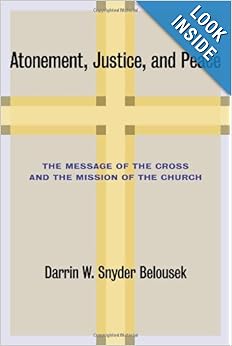
2)  "Atonement, Justice, and Peace:  The Message of the Cross and the Mission of the Church" by Darrin W. Synder Belousek
3)  "The Myth of a Christian Nation" by Greg Boyd
4)  "The Prophetic Imagination" by Walter Brueggemann
5)  "Christians at the Border:  Immigration, the Church, and the Bible" by M. Daniel Carroll R.
6)  "Life on the Vine" by Phil Kenneson
7)  "Five Smooth Stones for Pastoral Work" by Eugene Peterson
8)  "The Missional Leader" by Alan Roxburgh and Fred Romanuk
9)  "The Bible Made Impossible" by Christian Smith


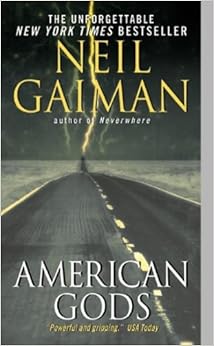
As far as fiction, I'm looking at working a little further in the Dune series as well as checking out some Neil Gaiman.

Additionally, if you have any suggestions, please let me know, I'm always looking for good reads.

Of course, these lists don't include the books I've already started from last year, or the books I'm currently reviewing for ERB.  But this, hopefully, a way to intentionally set out exploring theology, missions, pastoral work, current issues, etc, and maybe even becoming a more well rounded individual (though I would challenge to say that the many hours I have spent with Walter White and Jesse Pinkman have made me think deeper on morality and rightness).

In any case, this is it for now; maybe with some encouragement and internet accountability (whatever that means) I can avoid committing "resolution suicide" this year.  

Wednesday, May 15, 2013

Reading and Experiencing “The Shack” at the Shack


To begin with, I am not much of a fan of things that are specifically labeled as “Christian,” whether art, or music, or books, or movies, or radio stations, or television channels, or high schools…well, you get the picture.  Most art and music used to be inherently Christian, without having to adopt the moniker.  I think of the beauty of the Sistene Chapel or the novels of Dostoyevsky; neither artist set out to create something specifically “Christian,” so much as to worshipfully compose works that were reflective of the presence of God in the world.  Somewhere along the way, Christianity fell behind the ranks of “secular” artists, and rather than attempt to create something original and beautiful, it decided that imitation is the best form of flattery.  And so came about the rise of Christian rock and inspirational literature, which by and large is fluffy and superficial, taking the best of what’s popular and turning it into a “precious moments” art-lite insufferable mess of God and pop and family friendly kitsch. 

Now certainly there is still Christian innovation in the world of the arts; I think of the music of mewithoutyou, Gungor, and Reed Jones and the visual art created by my good friend Todd Buschur. And it would be faulty of me to say that no good comes out of the paintings of Thomas Kincaid or the “Inspiration” section at Barnes and Noble. 

With all of that in mind, I am especially suspicious of Christian Fiction.  I have a great love for literature and for novelists who over the centuries have been able to weave faith into their writings without sacrificing literary quality.  And I hold a special reprehension for authors who pump out masses of skin-deep pulp Christian books for the sake of a few dollars (I’m thinking of you Tim Lahaye!)  So it was with a great degree of wariness that I picked up and began to read “The Shack” by Wm. Paul Young. 

I had heard about this book several years ago from some friends who absolutely raved about it.  But being in my cynical undergraduate stage, I dismissed it.  My dad, however, decided a few years back to purchase copies of “The Shack” for the family, and being the dutiful son that I am, I proceeded to pick it up, read a few chapters, and then put it away on the shelf for safe keeping (and to gather dust). 

This weekend, my wife and I went on a retreat to Maple Ridge Ministries, a stunning pastoral suite located on the back of a minister’s property outside of Zanesfield Ohio.  Outfitted with a deck overlooking the forest, a hot tub, a small but quaint sitting room, a kitchenette, bedroom, and bathroom, and the sounds of nature, we were thoroughly enjoyed the opportunity to get away from “the world” and connect with one another on a deeper level.  I brought along with me my copy of “The Shack,” hoping I could blaze through it in time to sell it at the garage sale this coming weekend.  Surprisingly, I have found myself to be totally immersed and engaged in the world that Young created.

For those who have not heard the synopsis of this book, I will try to not spoil too much of the plot.  Suffice it to say, the story centers around a man, Mack, who suffers a horrific tragedy and is left in a great depression.  Upon discovering an anonymous note inviting him to return to the scene of the tragedy, the shack, for the weekend, Mack apprehensively makes the trip.  At the shack, Mack mysteriously encounters the three persons of God, “Papa” who comes in the form of a large, jovial African-American woman, Jesus, a middle-eastern carpenter, and Sarayu, the Holy Spirit in the form of a small, effervescent Asian woman.  Through  various episodic encounters, Mack discovers that his perception of God and God’s interaction with the world has been wrong and is able to work through his deep hurt and anger, which God patiently allows him to voice.

At the risk of sounding unintelligent to my academic friends, the theology contained within “The Shack” is solid.  Young creatively explores the doctrine of Trinity without attempting to systematically explain the nuances and implications of their relationships.  He even talks about them in the sense of a circle of love, which even theologian Clark Pinnock could appreciate.  Along with that, Young discusses the power struggle between God and humankind and how this has affected a multitude of relational structures in the world, including the connection between men and women. 

But, one of the most striking elements of theology that Young attempts to disseminate is the presence of suffering in the world.  And in spectacular fashion, he takes it slowly, allowing both Mack and the reader time to fully digest the character of God in relation to the evil that so affects our lives.  Young was able to express my exact feelings towards the question, “Why do bad things happen to good people?”  That God created humankind and allowed for our freedom because love cannot be true if it is forced, and because of our freedom we chose to sin and invited evil into creation.  And this evil has warped creation so that we today experience all kinds of atrocities, such as murders, rapes, genocide, warfare and diseases.  And none of these events are caused explicitly by God, but rather they are the result of a free world given over to sin.  Of course, this is a simple enough thing to type, but it’s much more difficult to assimilate into our belief systems when we are the ones experiencing hardship and heartache.

But that’s the beauty of “The Shack;” the reader is allowed enough time to empathize with Mack’s emotions and experiences so that by the time this answer is revealed, it does not seem so harsh and cold. It helps too that this response is given not in an academic setting but in a loving relationship to a present God. 

During my reading, there was one particular response that God gives to Mack that struck me hard and fast.  Mack, lamenting over the unnecessary occurrence of the tragedy and his inability to understand its purpose, says “I just can’t imagine any final outcome that would justify all this.”  (129)  Who of us has never asked this question, when a loved one gets diagnosed with terminal cancer or when we lose a job that we’re dependent on to feed our family or when a young child dies in a terrible car accident on a beautiful day?  What possible good could come out of those situations?  How can God justify them?  “Papa” responds to Mack by simply saying, “We’re not justifying it. We are redeeming it.”  (129)

And there’s the answer to our suffering.  God has no need to justify why those things happen because He (or she in this case) did not cause them to happen.  They are a result of a sinful and fallen world.  However, God does not stand idly by at the torment of His creation.  Instead, He mourns alongside of us and seeks to redeem, or to make right, the situation.

I have experienced my own “shacks” in life:  certain situations and events that I wish I could take back but know that I can’t, tragedies that I desire to control but cannot change.  And I have struggled, and continue to struggle, to understand the great question, why?  Why God?  Like David crying out to God over his son Absalom, I have felt a deep and unending despair, wanting to know how God is going to justify all of this. 

But…

It’s not about justification at all; it’s about redemption.  The question was never, “God, how can I change the past?”  It has always been, “God, will you redeem my present?”  And the answer has always been a resounding “YES, just stop trying to control it and let Me take over.”

So now comes the truest and most difficult challenge for all of us; how do we let go of control?

I haven’t yet finished the book, and I look forward to see Mack’s painful journey come to fruition.  In the same way, I am looking forward to seeing the conclusion of my own journey through suffering, and yours as well.  I am experiencing “The Shack” at the shack (which really isn’t a Shack, it’s incredibly nice, Google it.)  And I continue to pray for God’s revelation and my own release. 


Monday, April 22, 2013

Challenging the American Christian Public System: Review of A New Evangelical Manifesto-A Kingdom Vision for the Common Good

*Originally published in Englewood Review of Books
 

No matter how many times I read about evangelicals, their history, their theology and their current work, I find myself struggling to piece it all together, to explain who they are and how they came to be.  Perhaps it is because it is not a centrally defined movement and so much of its history and faith is nebulous in that it started in different places by different people who acted in different ways with similar core beliefs.  In the introduction to A New Evangelical Manifesto: A Kingdom Vision for the Common Good, editor David P. Gushee offers his definition of evangelicalism as a foundation for the essays that are to come:
“…evangelicals are spiritually serious, theologically orthodox, evangelistically engaged, morally earnest Protestant Christians, members of hundreds of particular denominational traditions and tens of thousands of congregations all over the country." (p. ix) 


In this characterization, Gushee does not explain what evangelicals believe but rather wishes to define the movement as a wide variety of adherents apart from the most radical sects within, usually identified as right wing conservatives and fundamentalists. 
Gushee prefaces this book by saying that it sprang out of the work being done by the New Evangelical Partnership for the Common Good.  His hopes are that the essays contained within would promote the principles of the mission statement of the organization.  It is too long to reprint here, but I will include portions of it that I think are necessary to understanding the particular stance of this group and their aims in the collective essays.

“Christians by definition are those who bear witness to our faith in Jesus Christ….one way is to offer proclamation and action concerning the moral will of God for human communities…some Christian moral witness occurs at national and international levels, where many significant challenges to human well-being are often created and addressed.  Christians have no choice but to engage religious, economic, cultural, and political institutions with our best efforts to articulate and embody the love and justice of Jesus Christ for the well-being of God’s world.” (p. x)

Specifically, the NEP wishes to engage the world in these ways: 
“We want to see Americans to choose to believe in Jesus and live as his disciples.  We see that the evangelistic and discpling work of American Christianity has been badly damaged by a generation of culture war-fighting-some doubt Jesus…because of Christians...We want to see an engagement of Christians in American public life that is loving, rather than angry; holistic, rather than narrowly focused; healing, rather than divisive; and independent of partisanship and ideology, rather than subservient to party or ideology.  We see in many sectors a Christian public engagement that calls itself Christan while often damaging the work of Christ and violating the teachings of Christ…We want to see a Christian public witness that reflects the actual life, ministry, and teachings of the Jesus Christ we meet in Scripture and expience in the church at its best.” (pp.x-xi)


Saturday, March 30, 2013

“I Bought a Book on Minimalism” and Other Ironies

Sometimes I like to imagine an alternate reality in which I am a lighthouse watchman and my wife and I life in a small cabin with few possessions.  It’s not so much the profession that I’m drawn to as it is the simplicity inherent in this kind of lifestyle.  And though I could live this way in the place that I am at now, I have found that it is such a great struggle to let go of my possessions.

More and more I am drawn to the concept of minimalism and what it might look like in my life.  Several weeks ago, my wife, some friends and I participated in a “possessions fast” as a part of our Lenten experiment to give up excess.  My job for that week was simple:  to get rid of 42 items, 7 each day of the week.  I had been looking forward to this for a while and am pleased to say that not only was I able to give up 42 of my “toys,” but that since then I have potentially doubled (maybe tripled?) that number.  There’s something invigorating about letting go of things; every item given away (or trashed or sold) is another burden or obligation lifted off of my shoulder.  I no longer have to use or make time to use that item, and I am freer to enjoy the simpler pleasures. 
Since this time I have been reading the blogs Becoming Minimalist and The Minimalists which, while also giving guides to de-cluttering different parts of your life (because minimalism isn’t just about things, it also involves our time commitments as well as other areas of our lives), offers helpful articles on different aspects of a minimalist lifestyle and provides links to other bloggers and articles.


Along with that, while at the Simply Youth Ministry Conference, I had the chance of running across Joshua Becker’s book Living with Less: An Unexpected Key to Happiness.  I was excited to lay my hands on this short primer on the Biblical impetus and benefits of reducing our possessions.  Becker, the author of the Becoming Minimalist blog, wrote this book specifically as a guide for teenagers, but I really have found it be a great starting point for anyone interested in beginning this journey. 

In the introduction to his book, Becker writes:
"Nobody really believes it.  Nobody really believes possessions equal joy.  In fact, if specifically    asked the question, nobody in their right mind would ever say the secret to a joyful, meaningful       life is to own a lot of stuff.  Deep down in their heart, nobody really thinks it’s true.  Yet almost all of us live like it is.” (pg. 1)

Becker spends part one of the book examining Jesus’ story for our lives, a story that is much richer than the riches we are promised will bring us happiness.  He explores several Gospel passages in which Jesus deals with the issues of money and possessions.  I appreciate his take on the parable of the rich young ruler from Luke 18:18-23.  He criticizes the common pastoral response to Jesus’ command for the young man to sell all his possessions and give to the poor, saying that when we make this a broad application to deal with whatever holds us the most captive from following God, we miss the deep and convicting truth that just maybe Jesus was really talking about money.  (pgs. 20-22)  Personally, I think Jesus had a definite purpose in that command; He himself modeled a life of poverty and simplicity, if we expect to follow after Jesus, shouldn’t this also be a part of that following? 
 
In part two, Becker shares his journey towards minimalism.  He first began considering this “movement” when one Saturday, he was unable to play ball with his son because he was too busy attempting to clean up and clean out the garage.  His neighbor, noticing the situation, began a conversation with him that ended up with her sharing about how her daughter is a minimalist.  (p. 31)

I wonder, in my own life, how often I have been so consumed with cleaning, organizing and even using my “stuff” that I have missed out on some important time spent with my family.  I say “I wonder,” but of course deep down, I know the answer.  Absolutely I have allowed the use and upkeep of possessions to interfere with the more enriching family moments.  I have been too “tired” to take a walk with my wife and dogs, but not so tired that I don’t end up watching six episodes of “Psych” in a row.  I have spent Saturday after Saturday trying to make a dent in the mess that becomes my room upstairs (I have a separate room for my books, music, and desk) when I could have been outside.  And, though I fantasize about being a famous author and blogger, the truth is that sometimes I would rather just play video games.  So no, I don’t really wonder. 
In this section too, Becker defines what minimalism means to his family.  He breaks it down into four statements:

          1)  We will intentionally promote the things we most value. (p. 38)
         2)  We will remove all “clutter” from our lives. (p. 38)
 
          3)  We will use our money for things more valuable than physical possessions. (p. 39) 

*(As a side note, I have been considering what this might look like in my life.  I am wondering if, rather than expending money on “things,” I should buy tickets to several Dave Matthews Band concerts in our area this summer.  He is one of my favorite artists, and the concerts have been pretty euphoric experiences for me.  If you would be interested in a two day stint in Indianapolis, let me know!)

         4)  We will live a countercultural life that is attractive to others. (p.40)

As I look over this list, I notice that only one of the four deals intentionally with the reduction of possessions.  The rest address the way in which we will prioritize our time.  Will we allow ourselves to be consumed by consumerism, or will we strive to get the most out of the short time that we have been given? 

Thursday, March 14, 2013

God is on the Cross: Reflections on Lent and Easter: A Review


(*Reviewer’s Note:  I am reviewing a pdf. copy from NetGalley on Kindle which does not include page numbers.  I will do my best to indicate from which areas of the book I use citations.)

Dietrich Bonhoeffer, minister and theologian living in Germany during the rise of Nazism, was imprisoned for taking part in a plot to assassinate Hitler.  In 1945, three months before he would be executed, he wrote the poem New Year 1945 about his hope for the coming year, in spite of all of the tragedies that had happened in the world the year before.


When now the silence deepens for our harkening
Grant we may hear Thy children’s voices raise
from all the unseen world around us darkening

their universal pain, in Thy praise.

While all the powers of good aid and attend us,

boldly we’ll face the future, be it what may.

At even, and at morn, God will befriend us,

and oh, most surely on each new year’s day


Each year, the church experiences the season of Lent and Easter as hope in the face of tragedy, which makes the writings of Bonhoeffer a perfect accompaniment for our journey towards the cross. 

God is on the Cross: Reflections on Lent and Easter(Westminster John Knox Press, 2012) is a devotional text of collected writings of Dietrich Bonhoeffer meant to be read daily in preparation for Easter.  In fact, it is a specific reworking of selections of text from a devotional collection released previously by Westminster John Knox Press entitled I want to Live These Days with You:  A Year of Daily Devotionals. Jana Riess, the editor, wove into the original text Scripture references from the NRSV and what she calls “bonus material” (xi) ,additional selections from other works of Bonhoeffer which tie into the devotional for the day. 

A theme is given to each week, week one being prayerful reflection, week two self-denial, week three temptation, week four suffering, week five the cross and finally devotions for Holy Week.  To draw the reader towards the “why” of using Bonhoeffer’s works, the editor notes that “These reflections have been chosen especially for Lent and Easter, a time when the liturgical calendar highlights several themes of Bonhoeffer’s beliefs and teachings:  that self-deinal is a necessary aspect of a Christian life; that the cross is central to human understanding; and that, without the atonement, every one of us would stand forever in the role of Judas.  Overall, the theme of suffering for Christ runs through Bonhoeffer’s work as one of the “costs” of discipleship. (Editor’s Preface) 

To help establish the context of the writings, the editor provides a brief biography of Bonhoeffer’s life in the preface.   Many of the secondary texts are drawn from letters and works written during his imprisonment and prior to his untimely execution by the Nazi state.  An example of this can be found in the bonus material for the first Sunday in Lent, an emotionally moving letter written by his fiancĂ©e, Maria Von Wedemeyer regarding the tragedy and hope of his situation, that we can commune with God and one another in spite of physical barriers and like the great paschal story, there is more to life than this present earth.  “My dearest Dietrich, every morning at six, when we both fold our hands in prayer, we know that we can have great faith, not only in each other but far, far above and beyond that.  And then you can’t be sad anymore either, can you?”

My biggest struggle with the general structure of this book is that the primary devotional texts drawn from the various works of Bonhoeffer aren’t cited.  In fact, I had to do some digging through the front of the book to find that these specific texts were already printed in another collection.   The editor does not tell even from where in the other devotional these texts are taken; one can only assume that they come from the correlating Lenten and Easter texts.  As one who enjoys looking to the original sources, I struggle with the amount of legwork that one would have to do to find from where specific quotations come.  Additionally, the bonus material is cited, but it isn’t plain at first whether or not the primary devotional and the bonus material come from the same source:  they do not.   The Scripture references, though, are clearly sourced. 

Structure aside, the selections chosen are mostly very good and appropriate for the selected themes of the week.  For the Ash Wednesday devotion under the first week theme, “Prayerful Reflection,” we are given a text from The Cost of Discipleship which sets the tone for the narrative scope of this devotional collection:   “Jesus emphasizes that each of us has his or her own cross, ready, appointed, and approximately measured by God.” 

From there the editor chooses readings about the power of meditation, the ever-presence of God and enduring hope in our faith.  From the devotion for the first Monday in Lent, “A faith that does not hope is sick…We will one day have to be ashamed, not of our hope, but of our miserable and anxious hopelessness that trusts nothing to God, that in false humility does not grasp where God’s promises are given, that is resigned to this life and cannot look forward to God’s eternal power and glory.”  The editor then connects this passage with Jeremiah 29:11, “For surely I know the plans I have for you, says the Lord, plans for your welfare and not for harm, to give you a future with hope.” 

As with any attempt to connect Scripture with other writings, sometimes it works and sometimes it doesn’t.  The difficulty of assessing this is that much of its related quality is subjective; to me, the devotion and the Scripture do not seem to connect overly well aside from sharing the word “hope.”  However, this may contain a strong connection to other people and serve as a very meaningful pairing. 

On the other hand, I believe that the editor made a very strong connection between the secondary devotional material and the Scripture reference for the second Thursday in Lent.  The theme for this week’s devotions is “Self-Denial.”  In a letter to Eberhard Bethge, Bonhoeffer writes:   “You must know that I still have never regretted for a moment my return in 1939, nor anything which then followed.  It all happened in full daylight and with good conscience.  The fact that I sit here now (in prison) I reckon also as participation in the fate of Germany , to which I committed myself.”  Dietrich felt convinced that he could never again serve the German people if he did not suffer with them.  The editor connects this act of self-denial to Paul’s description of Jesus in Philippians 2:5-8:  “and being found in human form, he humbled himself and became obedient to the point of death-even death on a cross.”  Jesus, through his own actions asserted that the path to ultimate service of others was denial of self.  Bonhoeffer’s decision to remain in Germany, then, is an awe inspiring modern day example of fulfilling this form of self-denial.  As a reader, I could see this connection and recognize the full scope of Jesus’ calling, that true acts sacrifice and self-denial are much more difficult than giving up chocolate for Lent.

And so through these types of connections and many others in this work, the reader can gain a deeper sense of the terrible journey to the cross, the awe of the resurrection, and the heavy implications of following after Jesus.  In this way, the devotional succeeds. 

If there are areas in which the reader cannot make such a strong connection, there are many good one-shot devotionals, bonus selections, and Scripture references. 

For instance, in the primary devotional text for the third Wednesday of Lent, “In the Wilderness,” Bonhoeffer writes:
“God removes from his son all human and creaturely help.  The hour oftemptation is supposed to find Jesus weak, alone, and hungry.  God leaves human beings alone in temptation…

What must remain incomprehensible to all human, ethical, and religious thought is that in            temptation God does not reveal himself as the one who is gracious and near, who arms us with all gifts of the spirit.  Rather, God forsakes us and is quite distant from us.  We are in the wilderness.”

Despite the sometimes experienced hopelessness in our own stories, being able to connect with Jesus’ narrative, as Bonhoeffer does here, allows for a mystical, trans-generational commiseration on temptation, that these things we experience are not unique.  Jesus, in his journey towards crucifixion, experienced temptation, and because of His sacrifice we can ultimately experience freedom from this “wilderness.” 

Reviewing any devotional material can be tricky; I recognize that this is not one cohesive narrative, rather it is a collection of snippets from other narratives, structured together thematically for shor, inspirational reading.  The editor set about a noble task in working with Bonhoeffer, though; to provide a deeper alternative to the many Easter devotionals out there that read more like “Christianity Lite” instead of touching on the true darkness of the season.  There are certainly flaws in the structuring and some of the pairing, at least from my perspective, but if you are looking for some devotional readings to turn your heart towards the cross that come from one of the premier theologians of this last century, this is more than a good start. 

Thursday, February 28, 2013

7: An Experimental Mutiny Against Excess Week 3-Possessions

It is always astounding to me the kind of attachments I put on my things.  They serve as memory keepers, unique collections, sheer entertainment, and in many cases I use them to bolster my identity.  Of course, I am not always active in labeling them in this way; however, these thoughts do come up whenever I consider getting rid of my things.  You see, week three’s fast focuses on possessions, and frankly, I’ve been looking forward to this one. 


My wife and I, since getting married, have gone through cycles of purging our possessions.  Much of our drive came from different books that we read during college and examples of simple, communal living that we had heard about, such as the Simple Way community in Philadelphia.  Several years ago I read Art Gish’s challenging book Beyond the Rat Race which made me seriously consider the different ways that I have bought into the materialism of the “American Dream.”  It was one of those works with a message that, unfortunately, I could not ignore.

Every time Erin and I finish another round of possession purging, I feel certain that this is it, that there couldn’t possibly be anything but the bare necessities left.  And every time I am proven to be drastically wrong.  The fast for this week is to “give up” seven items each day for the six days.  That’s forty two items, which, depending on how you look at it, may or may not be a challenge.  An added difficulty to this fast is that I got wild hair about a month back and did a quick purge of a few things that seemed to be cluttering up our space. 

But, committed to the fast, I began, again, to meticulously search the shelves.  This time, the items did not seem to jump at me as easily as before.  However, threw much rigor, I have been able to let go of more clothes, books, movies, music and several odd items.  I even threw away several sentimental items.
Some items of note:

-A DVD copy of “Goonies,” my all time favorite movie.  I have a Blu-Ray copy.

-A butane Statue of Liberty Lighter from my senior trip to New York.  It hasn’t had fuel in it since it first ran out and has successfully been gathering dust in my desk for the last eight years.  But I just needed to keep it!

-The paperback copy of Salem’s Lot that I read under the covers of my bed in third grade.  It’s seen much better days, and I have a much better print. 

During our Wednesday night church group, we read through Isaiah 55:1-2, one of the lectionary texts for this coming Sunday. 
“Come, all you who are thirsty, come to the waters; and you who have no money, come, buy and eat! Come, buy wine and milk without money and without cost. 2 Why spend money on what is not bread ,and your labor on what does not satisfy?

How disgustingly appropriate.

As a pastor, there aren’t very many vices that we are allowed without too much consternation on the part of the congregation.  Basically, we are permitted to overeat and spend money, both practices which I have been known to indulge in from time to time. 

One of the ways in which I “relieve stress,” as it were, is through “retail therapy.”  However this doesn’t happen with the traditional shopping spree.  Rather, like a chess player, I like to meticulously plan how I will spend the extra cash I have, maximizing its potential on valued items, usually media products such as books, movies and music. 

The Isaiah passage serves as a strong reminder that the “things” towards which I labor do not ultimately satisfy.  The hours I spend browsing and planning my next purchase should not have as much control over my life and my labor as they do.  I buy books that I do not have time to read and movies that I will watch twice, and even as I click “confirm order” on amazon.com, I am thinking of the next purchasing conquest in which I may endeavor. 

At the same time, I am increasingly attracted to minimalism and micro-living, two practices which could not live any further away from the bounds of materialism.  So there exists within me a constant inner tension between the desire to consume and the desire to purge. 

 Recently I read a blog from “Miss Minimalist” on de-cluttering your inner fantasy self. A fantasy self is the person that we imagine ourselves to be; we then surround ourselves with things based on this image.  She writes about her own fantasy self, a collector of antiquities which she dutifully carried from place to place in hopes that she might, someday, be able to fill a nice home with these various conversation pieces.   In the blog she writes:  All too often, we hold on to stuff because it represents who we think we should be, rather than who we are. Sometimes our fantasy selves are meant to impress others; sometimes they’re relics of our past; sometimes they’re fantasies about our future.”  Some of the fantasy selves that she describes include a “culinary diva,” a “fitness guru” and a “globetrotter” whose possessions are all reflective of their owner’s fantasy. 
Let me describe to you my fantasy selves (because like Legion, there are many).  In my mind I am…

-A multi-instrumentalist jazz musician and record collector.  This explains the multiple guitars I use infrequently and my burgeoning collection of music as well as books on music. 

-A film critic.  I have a revolving collection of hundreds of DVDs in my short life which have been sold (for very little profit, DVDs retain little value) in order to purchase more DVDs (and now Blu-Rays), all to impress nobody. 

-A world renowned writer and collector of books.  Between my home and my office, I could have over 1,000 books (probably more than I realize).  I shop book sales and thrift stores, Amazon and Ebay, to find the books that will define my interests, who I perceive myself to be, and how I would like others to think of me.  My collection includes classic literature, poetry and books on writing, an extensive theology collection, works on black history and religion, etc. 

With all of this in mind, I am not a hoarder.  In fact, due to our frenzied purging every year, our house probably has much less than the average American household.  But to me, it’s not about the amount of “stuff,” it’s about the significance I put upon my things, and whether or not my labor is being spent on items of eternal significance.

This will be, for sure, a battle not easily won.  I’m fighting against not only the pressures that American culture has put upon me but also the pressures I put upon myself.  In many senses, I’m taking back precious ground that has been given over to materials for quite some time. 

I don’t expect this process to end after this week, but I pray that the challenge serves as a continuation of God working to remind me that my identity lies in Christ, not my books.